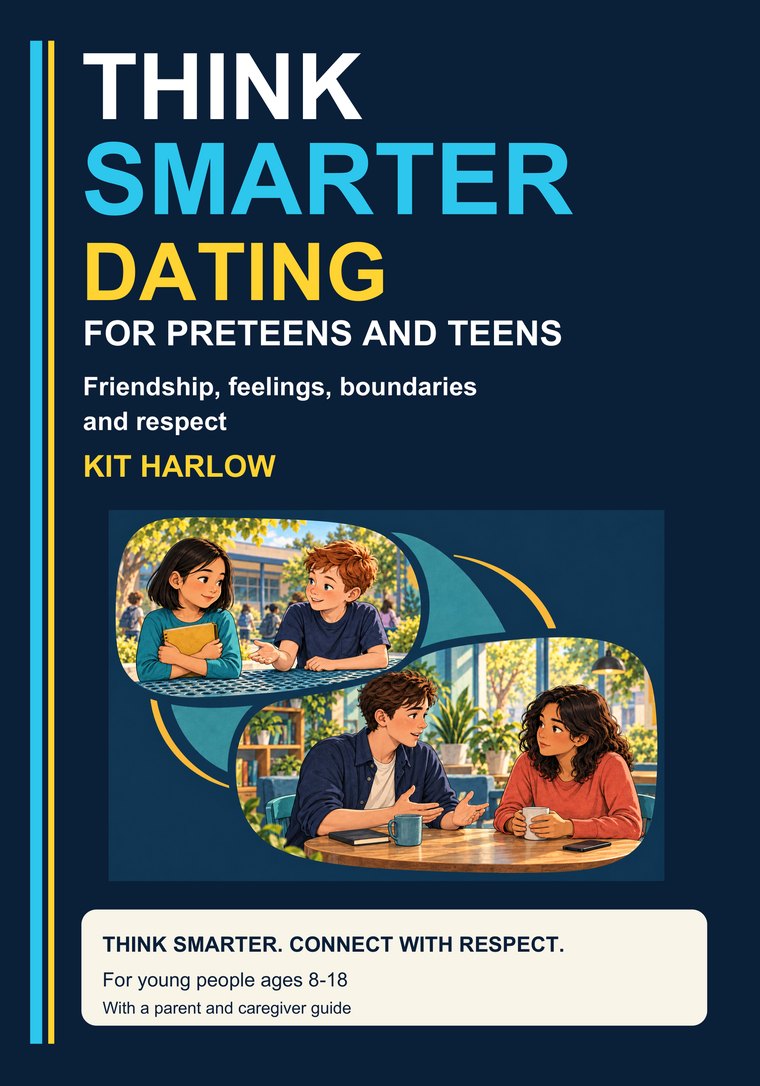
In productionAges 8–18, in three sections
Dating for Preteens and Teens
Friendship, feelings, boundaries, and respect
“Nobody earns control over you by liking you.”
You do not need to be dating to use this book. You do not need a crush, a partner, or a label. Friendship, personal space, kindness, and asking for help matter whether you date now, later, or never.
Not yet on sale. The interior is in final proofing. Join the waiting list and you will hear the day it is available.
Inside this book
What the book covers
- Three reader sections by age, plus a separate parent and caregiver guide
- Labels, crushes, personal space and permission for the youngest readers
- Interest, rejection, pressure, privacy and online-only contacts for the middle section
- Communication, consent, sexual-health literacy and unsafe relationships for older teens
- Practice phrases a reader can change until they sound like their own
The details
- 7 × 10 in paperback, illustrated
- 32 chapters across four parts
- 32 original illustrations, one per chapter
- Health and safety guidance checked against CDC, NHS, SOGC, Public Health Agency of Canada, Cybertip.ca and NCMEC
- Interior in final proofing
How a chapter works
The same shape, every time
Every chapter runs the same four beats. A reader can use the practice without sharing anything personal.
- A real momentA short fictional scene between characters who are learning, not performing.
- Think it throughWhat is actually going on, and the question worth asking.
- Your moveWords to try, and what to do if the other person says no.
- Try itA small activity that works alone or with a trusted adult.
From the pages
What it looks like
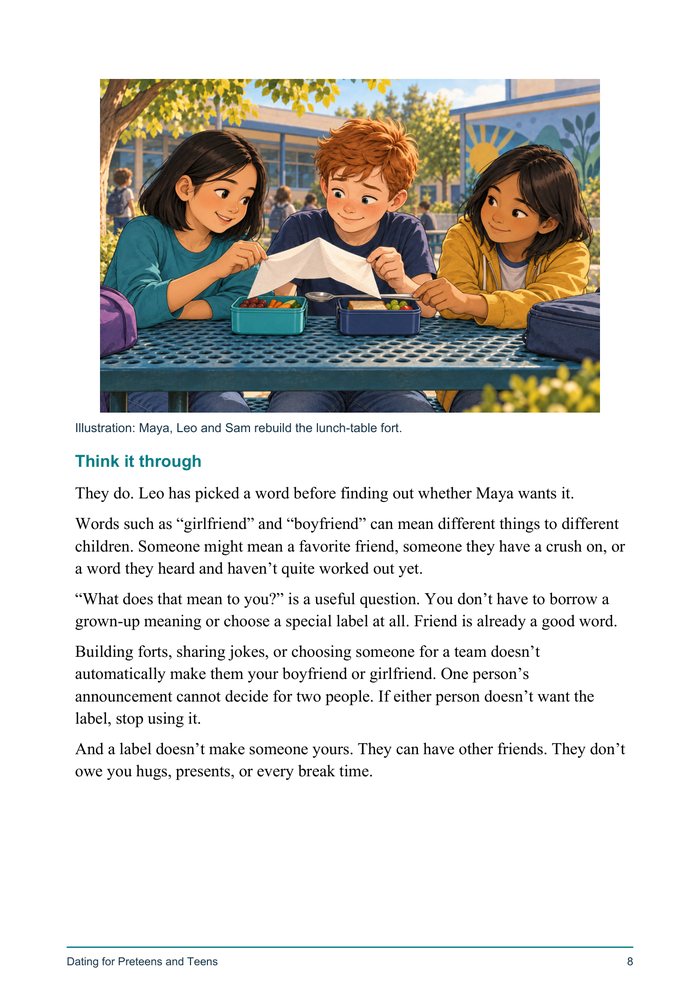
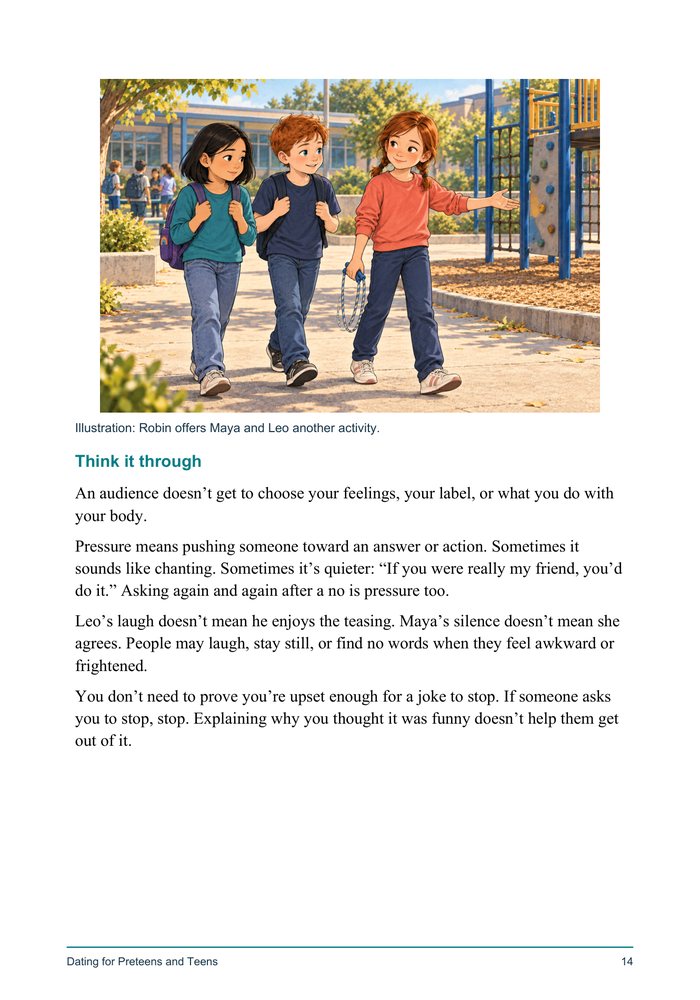
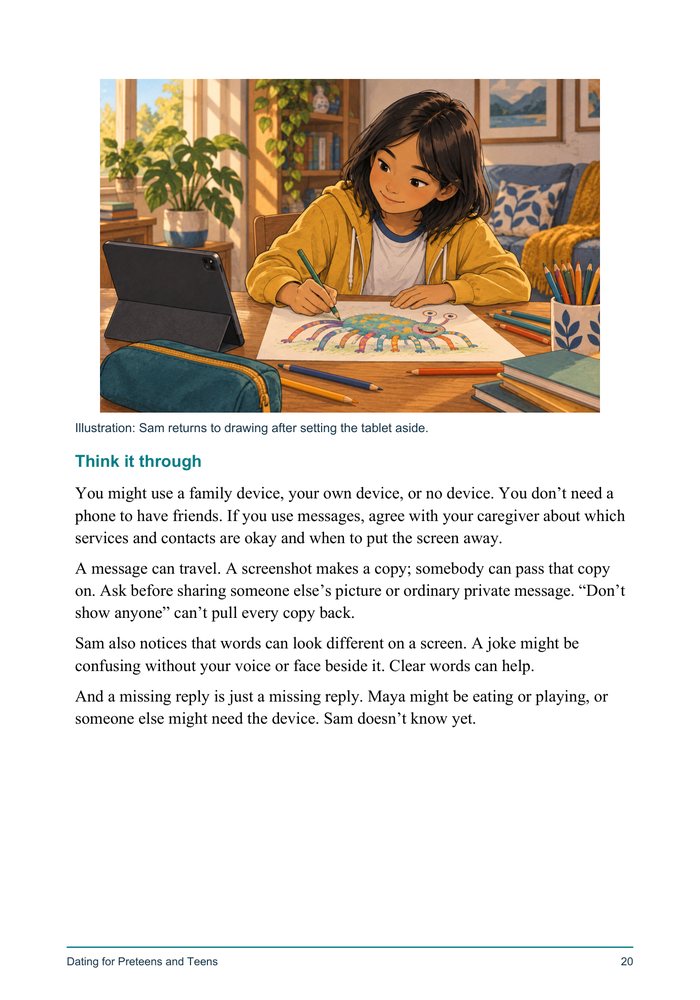
“Kindness does not require an unwanted hug, a date, a password, or an explanation of every private feeling. And having your own boundary does not give you the right to ignore someone else’s.”
From “Before you begin”
Contents
Every chapter
Part One — Ages 8–12: Friendship, crushes, and labels
- What do “girlfriend” and “boyfriend” mean?
- Crushes, friendship, and mixed-up feelings
- Does everyone agree? Labels, teasing, and pressure
- Personal space and permission
- Texts, messages, and keeping things private
- Kind ways to include others
- When to tell a trusted adult
- Short reflections and scenario practice
Part Two — Ages 13–15: Exploring relationships
- What you want, what you don’t want
- How to show interest without pressure
- Rejection, disappointment, and respect
- Peer pressure and “everyone’s doing it”
- Texting, privacy, and what to share
- People you have only met online
- Boundaries that protect time, space, and feelings
- Warning signs of controlling behavior
- When a relationship feels confusing or unsafe
- Short reflections and phrase practice
Part Three — Ages 16–18: Relationships and independence
- Expectations, labels, and what a relationship means to you
- Communication that is honest and respectful
- Consent, boundaries, and mutual care
- Dating, independence, and keeping your own life
- Sexual-health literacy and where to get reliable info
- Breakups, grief, and moving on
- Support systems: friends, family, mentors, professionals
- Warning signs, exit plans, and getting help
- Short reflections and scenario practice
Part Four — Parent and caregiver guide
- Start with curiosity, not assumptions
- Questions to ask without teasing
- How to talk about labels, privacy, and respect
- How to respond if a young person feels pressured or unsafe
- Support without control: when to step in, when to listen
Is it for you?
This book is for you if…
- You want one book that grows with a reader from primary school to sixth form.
- You would rather talk about boundaries before there is a problem to solve.
- You need language for consent and pressure that is neither clinical nor coy.
- You are the adult who wants to respond well when a young person finally tells you something.
A note on difficult material
The age ranges are reading guides, not instructions about when to start dating. The older section includes non-graphic sexual-health information intended for older teen readers. The book is general educational material, not individual medical care, legal advice, or a substitute for safeguarding support.
Waiting listFree download
Hear when Dating for Preteens and Teens is readyDating for Preteens and Teens is still in production
The interior is in final proofing. Leave your address and you will hear the day it is available — and get the free conversation starters now.The interior is in final proofing. Until it is out, here are the conversation starters it grew out of, free to print.
Free, and no address needed — there is no mailing list to join yet.