Better questions. Brighter ideas.
Thinking skills young readers can use the moment they need them.
Three illustrated books by Kit Harlow for the situations children and teenagers actually meet — confident claims, AI that sounds certain, online pressure, and working out what a friendship owes you.
The problem these books were written for
Young people are rarely short of information. They are very often short of a method.
Persuasive content can now be personalised, edited, generated, recommended and repeated at enormous speed. That makes the old thinking skills — evidence, logic, probability, source checking and self-control — more useful than they have ever been.
A method, not a verdict
The books do not tell a reader what to conclude about an app, a claim or a relationship. They show how to work it out — and say plainly that you may disagree with the characters.
Short enough to remember
THINK. PAUSE. Four beats per chapter. Every method in the series is built to be recalled while something is actually happening, not revised for afterwards.
Written for two readers
A young person gets a practical move. The adult next to them gets to understand what is going on, and what to say when they are told something difficult.
The series
Three books, three different problems
Each one stands alone. Start wherever the question is loudest.
In printAges 8–14
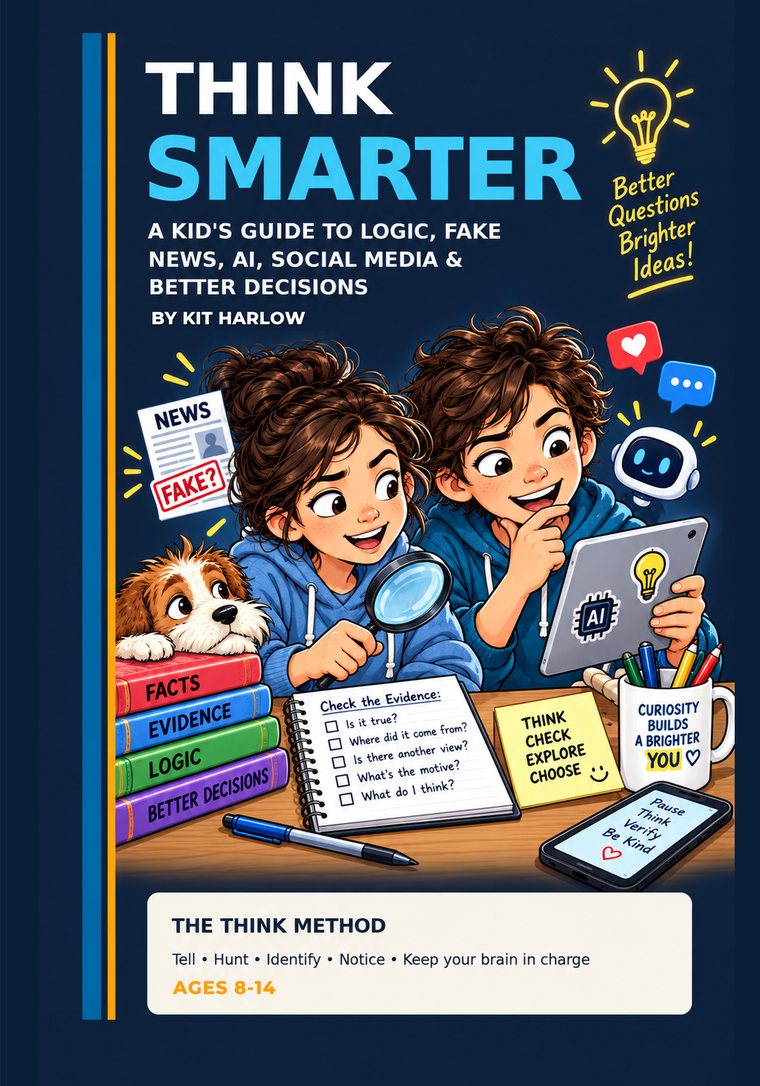
Think Smarter
A Kid’s Guide to Logic, Fake News, AI, Social Media & Better Decisions
Every day, kids meet confident claims, viral clips, sponsored posts, AI-generated answers, group pressure, and choices that feel urgent. Think Smarter turns critical thinking into a practical skill they can actually use.
In printAges 12–17
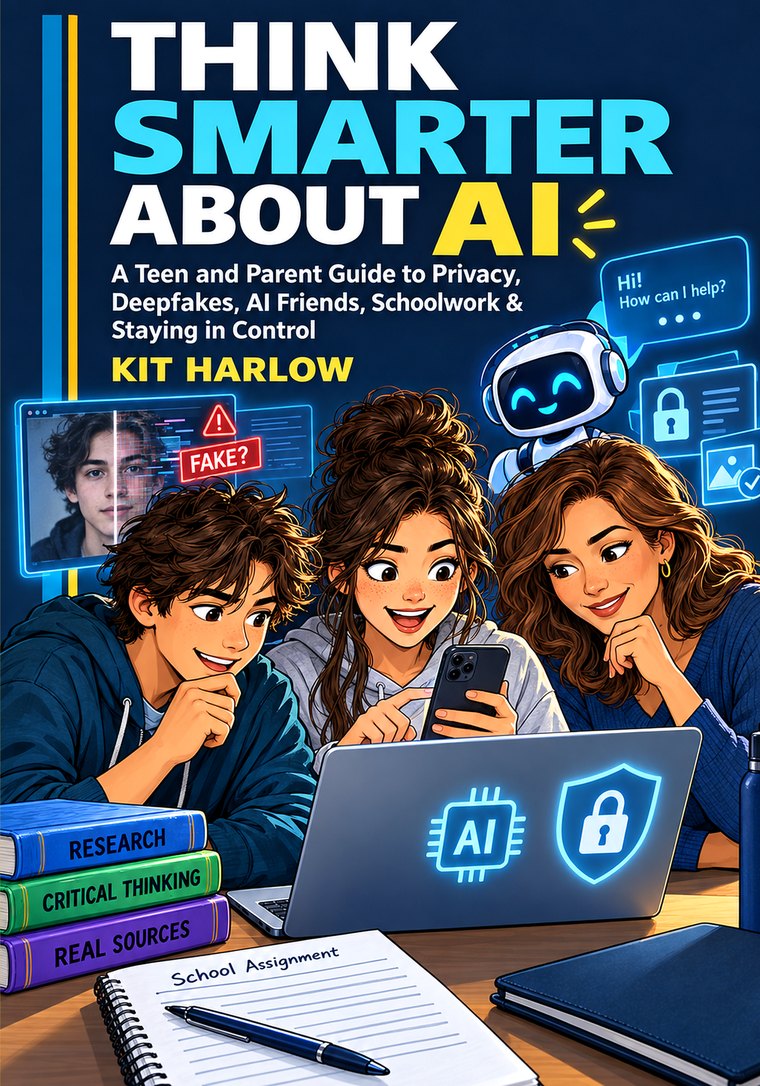
Think Smarter About AI
A Teen and Parent Guide to Privacy, Deepfakes, AI Friends, Schoolwork & Staying in Control
AI can answer homework questions, imitate a familiar voice, offer friendship, generate convincing images, and collect more personal information than families realize.
In productionAges 8–18, in three sections
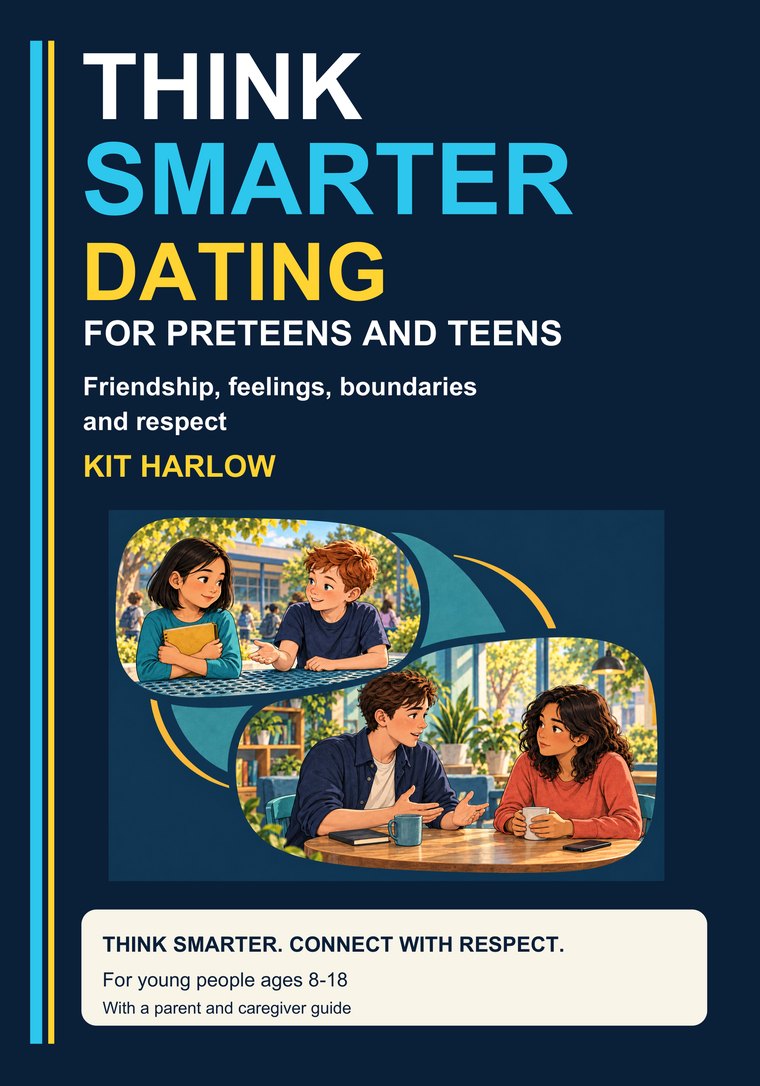
Dating for Preteens and Teens
Friendship, feelings, boundaries, and respect
You do not need to be dating to use this book. You do not need a crush, a partner, or a label. Friendship, personal space, kindness, and asking for help matter whether you date now, later, or never.
Free, and genuinely useful
Take something home before you buy anything
Printables pulled straight from the books — the family agreement, the method card, the checklist for the hour when nobody can think straight.
The THINK Method Card
Five moves, one card, stuck to the fridge.
Get it free Printable, fill-inThe Family AI Agreement
The conversation most families keep meaning to have.
Get it free Printable checklistThe First Hour Checklist
For the hour when nobody can think straight.
Get it free Printable questions30 Conversation Starters
Questions that survive a car journey.
Get it free“Critical thinking is not about teaching children to doubt everything. It is about helping them know what deserves trust, what deserves checking, and what deserves more time.”
Kit Harlow, from the opening pages of Think Smarter
The listFree download
Get the THINK Method card
Two printable cards on one sheet — the five THINK moves and the five-second habit. Join the list and it is yours; you will also hear first when the dating book is ready.Free to print, and yours without leaving an address.
Free, and no address needed — there is no mailing list to join yet.
Questions
Before you choose one
Do the books need to be read in order?
No. They are three separate books for three different situations, and each stands alone. Think Smarter is the broadest starting point if you want one book for a younger reader.
What ages are they actually for?
Think Smarter is written for ages 8–14. Think Smarter About AI is for ages 12–17 and is built to be read by a teen and an adult together. The dating book has three reader sections — ages 8–12, 13–15 and 16–18 — plus a separate caregiver guide.
Are these religious or political books?
No. They teach a method for thinking and a set of boundaries, and they deliberately avoid presenting one correct life path.
Can I use them with a class or a library group?
Yes — that is what the discussion tools at the back are for. There is a free ten-session classroom guide in the free resources, and the educators page covers bulk enquiries.
Is there an ebook?
The interiors are heavily illustrated and laid out for a 7 × 10 inch printed page, so print is the format that works properly today. Get on the list if you want to hear when that changes.
Will the AI book date quickly?
It is written to avoid that. The chapters are about categories of behaviour rather than particular products, and as the book puts it: the technology will change, the habits are built to last.